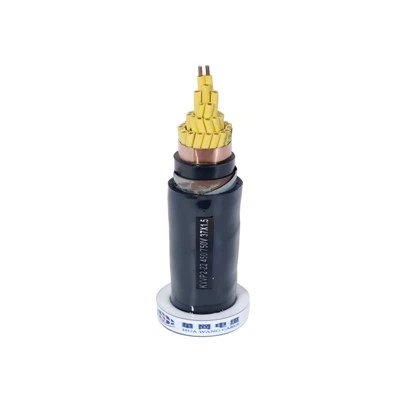

Thermal expansion is a natural phenomenon that occurs when materials change in volume or length as a result of temperature variations. This physical property can have a significant impact on various industrial components, including compensating cables. As a leading compensating cable supplier, I have witnessed firsthand how thermal expansion can affect the performance, durability, and overall functionality of these essential cables. In this blog post, I will delve into the intricate relationship between thermal expansion and compensating cables, exploring the challenges it presents and the strategies we employ to mitigate its effects.
Understanding Thermal Expansion
Before we discuss how thermal expansion affects compensating cables, it's crucial to understand the concept itself. Thermal expansion occurs because the atoms in a material vibrate more vigorously as the temperature rises. This increased vibration causes the atoms to move further apart, resulting in an increase in the material's volume or length. The degree of expansion depends on several factors, including the type of material, the temperature change, and the material's coefficient of thermal expansion (CTE).
The CTE is a measure of how much a material expands or contracts per unit length or volume per degree change in temperature. Different materials have different CTEs, which means they will expand or contract at different rates when exposed to the same temperature change. For example, metals generally have higher CTEs than ceramics, which means they will expand more when heated.
Impact of Thermal Expansion on Compensating Cables
Compensating cables are used to connect thermocouples to measuring instruments, allowing for accurate temperature measurements in various industrial applications. These cables are designed to mimic the thermoelectric properties of the thermocouple they are paired with, ensuring that the temperature signal is transmitted accurately without any loss or interference. However, thermal expansion can pose several challenges to the performance and reliability of compensating cables:
1. Mechanical Stress
As the temperature changes, the compensating cable will expand or contract along with the surrounding environment. If the cable is not properly installed or supported, this expansion and contraction can create mechanical stress on the cable, leading to damage or failure. For example, if the cable is tightly secured at both ends and there is no room for expansion, the stress can cause the cable to break or develop cracks, which can compromise its electrical integrity.
2. Electrical Resistance Changes
Thermal expansion can also affect the electrical resistance of the compensating cable. As the cable expands or contracts, the distance between the conductors can change, which can alter the electrical resistance of the cable. This change in resistance can introduce errors in the temperature measurement, as the measuring instrument relies on the electrical signal from the cable to determine the temperature. In extreme cases, the change in resistance can be significant enough to render the temperature measurement inaccurate or unreliable.
3. Connection Integrity
The connections between the compensating cable and the thermocouple or measuring instrument are critical for ensuring accurate temperature measurements. However, thermal expansion can cause these connections to loosen or become damaged over time. As the cable expands and contracts, the mechanical stress can cause the connectors to vibrate or move, which can lead to poor contact or even disconnection. This can result in intermittent or inaccurate temperature readings, which can be a serious problem in industrial applications where precise temperature control is essential.
Strategies to Mitigate the Effects of Thermal Expansion
As a compensating cable supplier, we understand the challenges posed by thermal expansion and have developed several strategies to mitigate its effects. These strategies are designed to ensure the performance, reliability, and durability of our compensating cables in even the most demanding industrial environments:
1. Proper Installation
Proper installation is crucial for minimizing the mechanical stress caused by thermal expansion. When installing compensating cables, it is important to allow for sufficient slack to accommodate the expansion and contraction of the cable. This can be achieved by using flexible conduit or cable trays, which provide a flexible pathway for the cable to move freely. Additionally, it is important to secure the cable at regular intervals to prevent it from sagging or moving excessively.
2. Selection of Materials
The choice of materials used in the construction of compensating cables can also have a significant impact on their resistance to thermal expansion. At our company, we use high-quality materials with low coefficients of thermal expansion to minimize the effects of temperature changes on the cable. For example, we use conductors made of materials such as copper or nickel, which have relatively low CTEs compared to other metals. Additionally, we use insulation materials that are resistant to heat and can withstand the mechanical stress caused by thermal expansion.
3. Design Considerations
In addition to proper installation and material selection, the design of the compensating cable can also play a role in mitigating the effects of thermal expansion. For example, we use a twisted pair design for our compensating cables, which helps to reduce the electromagnetic interference (EMI) and radio frequency interference (RFI) that can affect the accuracy of the temperature measurement. The twisted pair design also helps to minimize the mechanical stress on the cable by distributing the stress evenly across the conductors.
4. Regular Maintenance
Regular maintenance is essential for ensuring the long-term performance and reliability of compensating cables. This includes inspecting the cables for signs of damage or wear, checking the connections for tightness and integrity, and replacing any damaged or worn components as needed. By performing regular maintenance, we can detect and address any issues before they become serious problems, ensuring that our compensating cables continue to provide accurate temperature measurements for years to come.
Conclusion
Thermal expansion is a natural phenomenon that can have a significant impact on the performance, durability, and overall functionality of compensating cables. As a compensating cable supplier, we understand the challenges posed by thermal expansion and have developed several strategies to mitigate its effects. By using high-quality materials, proper installation techniques, and innovative design features, we can ensure that our compensating cables are resistant to the effects of temperature changes and provide accurate temperature measurements in even the most demanding industrial environments.


If you are in need of high-quality compensating cables for your industrial applications, we invite you to contact us to discuss your specific requirements. Our team of experts will be happy to help you select the right cable for your needs and provide you with the support and guidance you need to ensure its successful installation and operation.
For more information about our compensating cables, please visit our website:
References
- Incropera, F. P., & DeWitt, D. P. (2001). Introduction to heat transfer. John Wiley & Sons.
- Holman, J. P. (2002). Heat transfer. McGraw-Hill.
- ASME Boiler and Pressure Vessel Code, Section II, Part D, Properties of Materials, 2019 Edition.