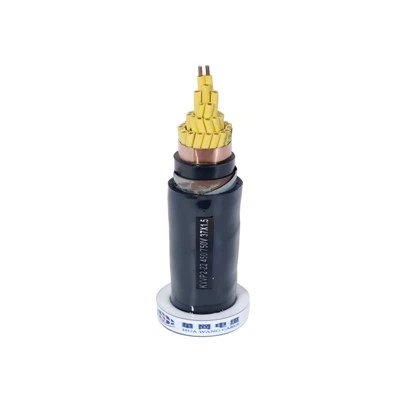

Instrumentation cables are an essential component in various industrial and commercial applications, providing reliable transmission of signals and power. One of the critical factors to consider when selecting instrumentation cables is their weather - resistance properties. As an instrumentation cable supplier, I understand the importance of these properties in ensuring the long - term performance and durability of the cables.


1. Importance of Weather - Resistance in Instrumentation Cables
Weather conditions can have a significant impact on the performance of instrumentation cables. Exposure to extreme temperatures, moisture, sunlight, and other environmental factors can cause degradation of the cable materials, leading to signal loss, insulation breakdown, and even complete cable failure. For instance, in outdoor industrial settings such as oil refineries, mines, and power plants, instrumentation cables are often exposed to harsh weather conditions. In these environments, a cable that is not weather - resistant may not be able to maintain its integrity, which can result in costly downtime and safety risks.
2. Key Weather - Resistance Properties
2.1 Temperature Resistance
Temperature variations can cause the materials in instrumentation cables to expand and contract. If a cable is not designed to withstand these temperature changes, it can lead to damage to the insulation and conductors. For example, in cold climates, the insulation may become brittle and crack, exposing the conductors to moisture and short - circuiting. On the other hand, in hot environments, the insulation may soften and lose its electrical properties.
Our company offers a range of instrumentation cables with excellent temperature resistance. For example, the KJYVP 16×1.5 Mm² Instrumentation Cable is designed to operate within a wide temperature range. It can withstand low temperatures down to - 40°C and high temperatures up to 70°C, making it suitable for various climate conditions.
2.2 Moisture Resistance
Moisture is one of the most common threats to instrumentation cables. Water can penetrate the cable insulation, causing corrosion of the conductors and reducing the cable's electrical performance. In addition, moisture can also promote the growth of mold and mildew, which can further damage the cable.
To address this issue, our cables are designed with moisture - resistant materials. The outer sheath of our cables is made of materials that have low water absorption rates. For example, the Fire Rated Instrumentation Cable has a special outer sheath that provides excellent moisture protection. This cable is also suitable for applications where there is a risk of fire, as it meets the relevant fire - rating standards.
2.3 UV Resistance
Sunlight contains ultraviolet (UV) rays, which can cause the outer sheath of instrumentation cables to degrade over time. UV - induced degradation can lead to cracking, fading, and loss of mechanical strength of the cable.
Our instrumentation cables are formulated with UV - resistant additives in the outer sheath. These additives absorb and dissipate the UV energy, protecting the cable from damage. The ZR - KJYVP 12×0.75 Mm² Instrumentation Cable is an example of a cable with high UV resistance. It is suitable for outdoor applications where the cable is exposed to direct sunlight for extended periods.
2.4 Chemical Resistance
In some industrial environments, instrumentation cables may be exposed to various chemicals such as acids, alkalis, and solvents. These chemicals can react with the cable materials, causing corrosion and degradation.
Our cables are designed to be resistant to a wide range of chemicals. The insulation and outer sheath materials are selected based on their chemical resistance properties. This ensures that the cables can maintain their performance even in harsh chemical environments.
3. Testing and Certification
To ensure the weather - resistance properties of our instrumentation cables, we conduct rigorous testing. Our testing procedures include temperature cycling tests, moisture penetration tests, UV exposure tests, and chemical resistance tests. These tests simulate real - world weather conditions and ensure that the cables can meet the required performance standards.
In addition to our in - house testing, our cables are also certified by relevant international standards organizations. These certifications provide independent verification of the cables' weather - resistance properties and give our customers confidence in the quality of our products.
4. Applications of Weather - Resistant Instrumentation Cables
Weather - resistant instrumentation cables are used in a wide range of applications. In the energy sector, they are used in oil and gas exploration, power generation, and renewable energy projects. For example, in offshore oil platforms, the cables need to withstand the harsh marine environment, including saltwater, high winds, and extreme temperatures.
In the transportation industry, weather - resistant cables are used in railway systems, airports, and automotive applications. These cables need to be able to operate reliably in different weather conditions, ensuring the safety and efficiency of the transportation systems.
In the industrial automation field, weather - resistant instrumentation cables are used to connect sensors, controllers, and other devices. They ensure the accurate transmission of signals in various industrial environments, including factories, warehouses, and outdoor production facilities.
5. Choosing the Right Weather - Resistant Instrumentation Cable
When choosing a weather - resistant instrumentation cable, several factors need to be considered. First, the specific weather conditions of the application environment need to be determined. For example, if the cable will be used in a cold climate, a cable with good low - temperature resistance should be selected. If the cable will be exposed to sunlight, a cable with high UV resistance is required.
Second, the electrical requirements of the application also need to be considered. This includes factors such as the voltage rating, current - carrying capacity, and signal transmission requirements.
Finally, the cost - effectiveness of the cable should also be taken into account. While high - quality weather - resistant cables may have a higher upfront cost, they can provide long - term savings by reducing the need for frequent replacements and maintenance.
6. Contact for Procurement and Consultation
If you are in need of high - quality weather - resistant instrumentation cables, we are here to help. Our team of experts can provide you with detailed information about our products and help you choose the right cable for your specific application. We are committed to providing excellent customer service and ensuring that our customers are satisfied with our products.
Feel free to reach out to us to discuss your requirements and start a procurement process. We look forward to working with you to meet your instrumentation cable needs.
References
- International Electrotechnical Commission (IEC) standards on cable performance and environmental resistance.
- National Fire Protection Association (NFPA) standards for fire - rated cables.
- Industry reports on the impact of weather conditions on cable performance.