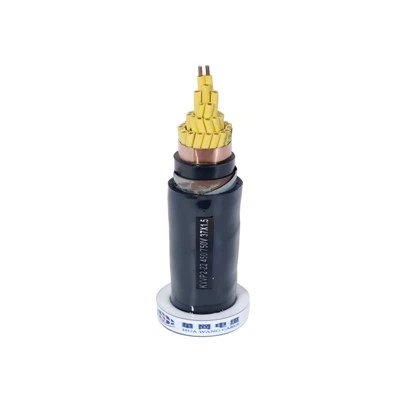

Hey there! As a supplier of Sheathed Flexible Cable, I've been getting a lot of questions lately about how the thickness of the sheath affects the performance of these cables. So, I thought I'd take a deep dive into this topic and share my insights with you.
First off, let's talk about what a sheath is. The sheath is the outer layer of the Sheathed Flexible Cable. It's like a protective jacket that shields the inner conductors from all sorts of external factors. And just like different types of jackets are suitable for different weather conditions, the thickness of the sheath can have a big impact on how well the cable performs.
Protection Against Physical Damage
One of the most obvious ways the sheath thickness affects performance is in terms of protection against physical damage. A thicker sheath provides a more robust barrier against cuts, abrasions, and impacts. For example, in industrial settings where cables are often dragged across rough surfaces or are at risk of being stepped on or hit by heavy equipment, a cable with a thick sheath is much more likely to survive without damage.
Let's say you're using a Sheathed Flexible Cable in a construction site. There are all kinds of sharp objects and heavy machinery around. If the sheath is too thin, it can easily get punctured or torn, exposing the inner conductors. This not only poses a safety hazard but also can lead to cable failure. On the other hand, a cable with a thick sheath can withstand a fair amount of abuse and keep functioning properly. Check out our Sheathed Flexible Cable for options with different sheath thicknesses to suit your needs.
Resistance to Environmental Factors
The thickness of the sheath also plays a crucial role in protecting the cable from environmental factors. In outdoor applications, cables are exposed to sunlight, moisture, and extreme temperatures. A thick sheath can provide better resistance to these elements.
Sunlight contains ultraviolet (UV) rays that can degrade the material of the sheath over time. A thicker sheath has more material to absorb and dissipate the UV energy, reducing the risk of cracking and degradation. Moisture is another enemy of cables. If water seeps into the cable, it can cause corrosion of the conductors and short circuits. A thick, well - sealed sheath can act as a better barrier against moisture penetration.
In areas with extreme temperatures, a thick sheath can help insulate the inner conductors. In cold weather, it can prevent the cable from becoming brittle and cracking, while in hot weather, it can help dissipate heat and prevent overheating. Our Sheathed Copper Wire is designed with different sheath thicknesses to handle various environmental conditions.
Electrical Performance
Believe it or not, the sheath thickness can also affect the electrical performance of the cable. The sheath acts as an insulator, and its thickness can influence the capacitance and impedance of the cable.


A thicker sheath generally means more insulation material, which can increase the capacitance of the cable. This can be both a good and a bad thing. In some applications, a certain level of capacitance is desirable, as it can help in signal transmission. However, if the capacitance is too high, it can cause signal distortion and loss, especially in high - frequency applications.
Impedance is another important factor. The impedance of a cable should match the impedance of the connected devices for optimal signal transfer. A change in sheath thickness can alter the impedance of the cable. So, when choosing a cable, you need to consider the electrical requirements of your application and select the appropriate sheath thickness. Our Single Core Sheathed Cable is available with different sheath thicknesses to meet different electrical performance needs.
Flexibility
Now, here's a bit of a trade - off. While a thick sheath offers better protection and can have some positive effects on electrical performance, it can also reduce the flexibility of the cable. Sheathed Flexible Cables are designed to be flexible so that they can be easily bent and routed in different applications. A very thick sheath can make the cable stiffer and more difficult to work with.
However, modern manufacturing techniques have made it possible to produce cables with thick sheaths that still maintain a good level of flexibility. We use high - quality materials and advanced manufacturing processes to ensure that our cables with thicker sheaths are still flexible enough for most applications. But if you need a cable that requires extreme flexibility, you might need to choose a thinner sheath.
Cost Considerations
The thickness of the sheath also has an impact on the cost of the cable. A thicker sheath requires more material and more manufacturing time, which generally means a higher cost. When you're deciding on the sheath thickness, you need to balance the performance benefits against the cost.
If you're using the cable in a low - risk environment where there's little chance of physical damage or exposure to harsh environmental conditions, a thinner sheath might be sufficient. This can save you money without sacrificing too much in terms of performance. On the other hand, if the cable is going to be used in a high - risk environment, investing in a cable with a thicker sheath is a wise choice in the long run, as it can reduce the risk of cable failure and the need for frequent replacements.
Conclusion
In conclusion, the thickness of the sheath has a significant impact on the performance of Sheathed Flexible Cables. It affects protection against physical damage, resistance to environmental factors, electrical performance, flexibility, and cost. As a supplier, we offer a wide range of cables with different sheath thicknesses to meet the diverse needs of our customers.
If you're in the market for Sheathed Flexible Cables and want to discuss which sheath thickness is best for your application, don't hesitate to reach out to us. We're here to help you make the right choice and ensure that you get the best performance from your cables.
References
- Electrical Wiring Handbook, various editions
- Cable Manufacturing and Technology textbooks