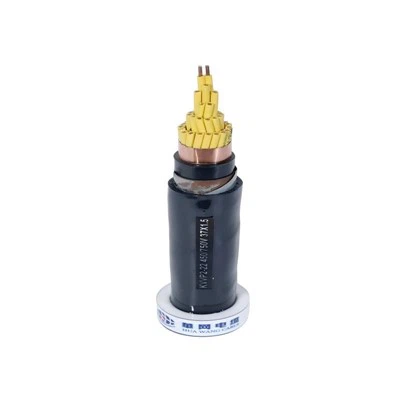

Can sheathed flexible cable be bent multiple times? This is a question that often comes up among our customers, and as a leading supplier of Sheathed Flexible Cable, I'm here to provide a comprehensive answer.
Understanding Sheathed Flexible Cable
Before we delve into the matter of multiple bends, let's first understand what sheathed flexible cable is. Sheathed flexible cables are designed to provide flexibility while protecting the inner conductors from environmental factors such as moisture, abrasion, and mechanical stress. These cables typically consist of one or more insulated conductors surrounded by a protective sheath. The sheath can be made from various materials, including PVC, rubber, or thermoplastic elastomers, each offering different levels of protection and flexibility.
One of the key advantages of sheathed flexible cables is their ability to be bent without significant damage to the conductors. This makes them ideal for applications where the cable needs to be routed around corners, through tight spaces, or in dynamic environments where movement is expected. For example, in industrial machinery, robotics, and automation systems, sheathed flexible cables are commonly used to connect moving parts and provide power and signal transmission.
Factors Affecting Bendability
The ability of a sheathed flexible cable to withstand multiple bends depends on several factors, including the cable construction, conductor material, sheath material, and bend radius.
Cable Construction
The construction of the cable plays a crucial role in its bendability. Cables with a stranded conductor are generally more flexible than those with a solid conductor. Stranded conductors consist of multiple small wires twisted together, which allows them to bend more easily without breaking. Additionally, the number of strands and the way they are twisted can also affect the cable's flexibility. For example, cables with a higher number of strands and a tighter twist are typically more flexible.
Conductor Material
The conductor material also affects the cable's bendability. Copper is the most commonly used conductor material in sheathed flexible cables due to its excellent electrical conductivity and flexibility. Copper conductors can withstand multiple bends without significant loss of conductivity or mechanical integrity. However, other materials such as aluminum can also be used, although they may have different bendability characteristics.
Sheath Material
The sheath material provides protection for the inner conductors and also affects the cable's bendability. Soft and flexible sheath materials, such as rubber or thermoplastic elastomers, allow the cable to bend more easily without cracking or splitting. On the other hand, rigid sheath materials, such as PVC, may limit the cable's bendability, especially in applications where tight bends are required.
Bend Radius
The bend radius is the minimum radius at which a cable can be bent without causing damage to the conductors or the sheath. The bend radius is typically specified by the cable manufacturer and depends on the cable construction, conductor size, and sheath material. A smaller bend radius allows for more flexibility but also increases the stress on the cable, which can lead to premature failure. Therefore, it is important to follow the manufacturer's recommended bend radius to ensure the long-term reliability of the cable.
Testing and Standards
To ensure the quality and performance of sheathed flexible cables, manufacturers conduct various tests to evaluate their bendability. One of the most common tests is the flexing test, which involves repeatedly bending the cable through a specified angle and number of cycles. The cable is then inspected for any signs of damage, such as conductor breakage, sheath cracking, or insulation failure.
In addition to manufacturer testing, there are also several international standards that specify the requirements for sheathed flexible cables, including their bendability. For example, the International Electrotechnical Commission (IEC) has developed standards such as IEC 60245 and IEC 60227, which cover the requirements for rubber-insulated and PVC-insulated cables, respectively. These standards specify the minimum bend radius, the number of flexing cycles, and the test methods for evaluating the cable's bendability.
Applications and Considerations
Sheathed flexible cables are used in a wide range of applications, from industrial machinery and automation systems to consumer electronics and household appliances. In each application, the cable's bendability requirements may vary depending on the specific needs of the system.
Industrial Applications
In industrial applications, sheathed flexible cables are often used in harsh environments where they are exposed to high temperatures, chemicals, and mechanical stress. These cables need to be able to withstand multiple bends without losing their electrical or mechanical properties. For example, in robotic arms and conveyor systems, the cables need to be flexible enough to allow for smooth movement while also being durable enough to withstand the constant bending and twisting.
Consumer Electronics
In consumer electronics, sheathed flexible cables are used to connect various components, such as displays, keyboards, and mice. These cables need to be thin and flexible to fit into small spaces and provide a reliable connection. For example, in laptops and smartphones, the cables need to be able to bend multiple times without breaking or causing signal interference.
Household Appliances
In household appliances, sheathed flexible cables are used to provide power and control signals. These cables need to be safe and reliable, even in the presence of moisture and mechanical stress. For example, in washing machines and refrigerators, the cables need to be able to withstand the constant movement and vibration without causing any safety hazards.
When selecting a sheathed flexible cable for a specific application, it is important to consider the cable's bendability requirements, as well as other factors such as the operating temperature, the environmental conditions, and the electrical requirements. It is also recommended to consult with a cable manufacturer or a professional engineer to ensure that the selected cable meets the specific needs of the application.
Conclusion
In conclusion, sheathed flexible cables can be bent multiple times, but their ability to withstand repeated bending depends on several factors, including the cable construction, conductor material, sheath material, and bend radius. By understanding these factors and following the manufacturer's recommendations, it is possible to select a sheathed flexible cable that can meet the specific bendability requirements of your application.


As a supplier of Sheathed Flexible Cable, we offer a wide range of high-quality cables that are designed to provide excellent bendability and reliability. Our cables are available in various sizes, configurations, and materials to meet the diverse needs of our customers. Whether you need a cable for industrial machinery, consumer electronics, or household appliances, we can provide you with the right solution.
If you are interested in learning more about our sheathed flexible cables or would like to discuss your specific requirements, please feel free to contact us. Our team of experts is always ready to assist you and provide you with the best possible advice and solutions.
References
- International Electrotechnical Commission (IEC). IEC 60245: Rubber-insulated cables of rated voltages up to and including 450/750 V.
- International Electrotechnical Commission (IEC). IEC 60227: Polyvinyl chloride-insulated cables of rated voltages up to and including 450/750 V.