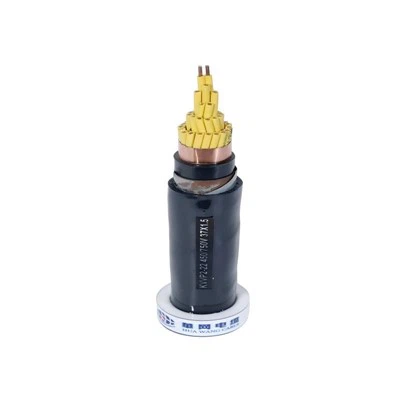

In the realm of audio technology, the choice of cables plays a pivotal role in determining the quality of sound transmission. One type of cable that often comes under consideration for audio applications is the shielded three - core cable. As a supplier of Shielded Three - core Cable, I am frequently asked whether this cable can be effectively used for audio purposes. In this blog, we will delve into the technical aspects, advantages, and potential limitations of using a shielded three - core cable in audio setups.
Understanding the Basics of Shielded Three - Core Cables
Before we explore its audio applications, let's first understand what a shielded three - core cable is. A shielded three - core cable consists of three individual conductors enclosed within an outer shielding layer. The three conductors are typically used to carry different electrical signals, and the shielding is designed to protect these signals from external electromagnetic interference (EMI) and radio - frequency interference (RFI).
The shielding can be made of various materials, such as braided copper, aluminum foil, or a combination of both. Braided copper shielding provides good flexibility and mechanical protection, while aluminum foil shielding offers excellent high - frequency shielding performance. The choice of shielding material depends on the specific requirements of the application.


Technical Aspects for Audio Applications
Signal Transmission
In audio systems, the primary goal is to transmit audio signals from the source (e.g., a microphone, amplifier, or audio player) to the destination (e.g., speakers or headphones) with minimal distortion and interference. A shielded three - core cable can be well - suited for this task.
One of the cores can be used as the hot (positive) signal conductor, another as the cold (negative) signal conductor, and the third can serve as a ground conductor. This configuration is similar to the balanced audio cable setup, which is widely used in professional audio applications. Balanced audio uses two signal conductors that carry identical signals but with opposite polarities. At the receiving end, the difference between these two signals is taken, effectively canceling out any common - mode noise that may have been picked up along the cable.
The shielding around the three cores further enhances the noise - rejection capabilities. By providing a low - impedance path for the external interference to flow to ground, the shielding prevents the interference from coupling into the audio signals. This results in a cleaner and more accurate audio signal transmission.
Impedance Matching
Impedance matching is another crucial factor in audio cable design. The impedance of a cable refers to its opposition to the flow of electrical current at a given frequency. In audio systems, it is important to match the impedance of the cable with the output impedance of the source device and the input impedance of the destination device.
Shielded three - core cables can be designed with specific impedance values to match the requirements of different audio equipment. For example, many professional audio devices are designed to work with cables having an impedance of 600 ohms. By using a shielded three - core cable with the appropriate impedance, we can ensure maximum power transfer and minimize signal reflections, which can cause distortion and degradation of the audio quality.
Advantages of Using Shielded Three - Core Cables in Audio
Noise Reduction
As mentioned earlier, the shielding in a shielded three - core cable provides excellent protection against EMI and RFI. In modern environments, there are numerous sources of electromagnetic interference, such as power lines, radio transmitters, and electronic devices. These interferences can introduce unwanted noise and hum into the audio signals, degrading the overall audio quality.
A shielded three - core cable effectively reduces this noise, allowing for a cleaner and more professional - sounding audio. This is particularly important in live sound applications, recording studios, and other environments where high - quality audio is essential.
Durability
Shielded three - core cables are generally more durable than unshielded cables. The outer shielding layer provides mechanical protection to the inner conductors, preventing them from being damaged by physical stress, abrasion, or bending. This makes them suitable for use in harsh environments or applications where the cable may be subject to frequent movement or handling.
Compatibility
Shielded three - core cables are compatible with a wide range of audio equipment. They can be used with microphones, amplifiers, mixers, and other audio devices that support balanced or unbalanced audio connections. This versatility makes them a popular choice for audio professionals and enthusiasts alike.
Potential Limitations
Cost
Compared to unshielded cables, shielded three - core cables are generally more expensive. The additional cost is due to the materials used for the shielding and the more complex manufacturing process. For budget - conscious applications or where the level of interference is relatively low, the higher cost of shielded three - core cables may not be justified.
Flexibility
While shielded three - core cables can be made flexible, they are typically less flexible than single - core cables. The presence of the shielding layer and multiple conductors adds to the overall stiffness of the cable. In applications where extreme flexibility is required, such as in some portable audio devices or tight - space installations, the reduced flexibility of shielded three - core cables may be a drawback.
Comparison with Other Cable Types
Single Core Sheathed Cable
Single Core Sheathed Cable is a simple cable type that consists of a single conductor enclosed in a protective sheath. It is commonly used for power transmission or in applications where only a single signal needs to be carried.
In audio applications, single - core sheathed cables are generally not suitable for long - distance or high - quality audio transmission. They are more susceptible to electromagnetic interference and do not support balanced audio connections. However, they can be used for short - distance, low - noise applications, such as connecting a small audio device to a nearby amplifier.
Sheathed Copper Wire
Sheathed Copper Wire is a more general term that can refer to various types of cables with a copper conductor and a protective sheath. It can include single - core, multi - core, and shielded cables.
When compared to shielded three - core cables, sheathed copper wire may or may not have the same level of noise - rejection capabilities. Unshielded sheathed copper wire is more vulnerable to interference, while shielded versions can offer similar performance to shielded three - core cables. However, the specific design and construction of the cable determine its suitability for audio applications.
Real - World Applications
Professional Audio Recording
In professional audio recording studios, shielded three - core cables are widely used to connect microphones to audio interfaces, mixers, and other recording equipment. The high - quality signal transmission and noise - rejection capabilities of these cables ensure that the recorded audio is free from distortion and interference.
Live Sound Reinforcement
In live sound applications, such as concerts, festivals, and theater performances, shielded three - core cables are essential for connecting microphones, speakers, and amplifiers. The long cable runs and high - power audio signals in these environments make them particularly susceptible to interference. Shielded three - core cables help to maintain the integrity of the audio signals, providing a clear and powerful sound for the audience.
Home Audio Systems
Even in home audio systems, shielded three - core cables can be beneficial. They can be used to connect audio components, such as CD players, amplifiers, and speakers, especially in areas where there is a high level of electromagnetic interference. By using shielded cables, homeowners can enjoy a better - quality audio experience with less background noise.
Conclusion
In conclusion, a shielded three - core cable can be an excellent choice for audio applications. Its ability to reduce noise, provide balanced signal transmission, and offer good impedance matching makes it suitable for a wide range of audio setups, from professional recording studios to home audio systems.
However, it is important to consider the potential limitations, such as cost and flexibility, when choosing a cable for a specific application. In some cases, other cable types may be more appropriate.
As a supplier of Shielded Three - core Cable, I am committed to providing high - quality cables that meet the diverse needs of audio professionals and enthusiasts. If you are interested in learning more about our products or have specific requirements for your audio application, please feel free to contact us for a detailed discussion. We look forward to working with you to find the best cable solution for your audio needs.
References
- Ballou, Glen. "Handbook for Sound Engineers: The New Audio Cyclopedia." Focal Press, 2008.
- Giddings, Martin. "Audio Engineering Explained." Elsevier, 2012.
- Davis, Mark. "The Mixing Engineer's Handbook." Backbeat Books, 2009.