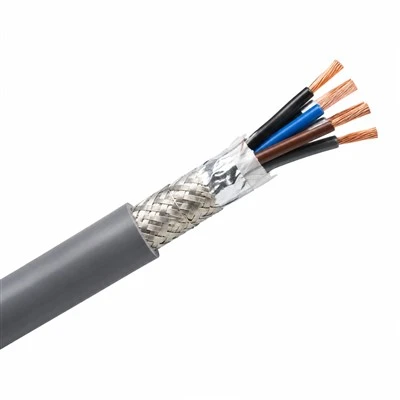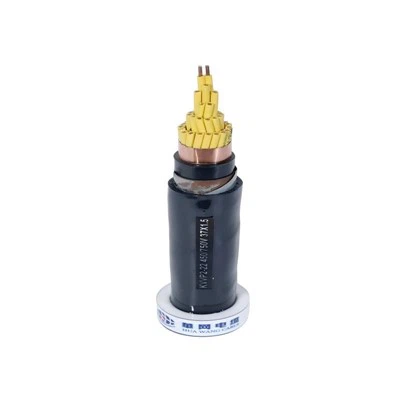

Power cables and control cables are essential components of industrial electrical systems. Although both are used to connect electrical equipment, they serve different purposes. Power cables transmit electrical energy to equipment and distribution systems, while control cables carry control signals and operating commands between electrical devices, instruments, and automation systems.
Choosing the right cable requires more than comparing its name or appearance. Buyers need to consider the electrical load, rated voltage, conductor size, insulation material, installation environment, mechanical protection, and applicable standards. Huawang provides a range of industrial cable solutions for power transmission, electrical equipment connections, and control circuit applications. The appropriate construction depends on the requirements of each project.

What Is the Difference Between Power Cable and Control Cable?
The main difference between a power cable and a control cable is their intended function. A power cable is designed to deliver electrical energy, whereas a control cable is generally used to transmit signals and commands that operate or monitor equipment.
| Comparison Item | Power Cable | Control Cable |
|---|---|---|
| Main function | Transmits electrical energy to equipment or distribution systems | Transmits control signals and operating commands |
| Typical applications | Power distribution, machinery supply, motors, and electrical installations | Control cabinets, automation systems, machine control circuits, and monitoring equipment |
| Design priorities | Current-carrying capacity, voltage rating, insulation, and protection | Signal reliability, conductor identification, circuit arrangement, and possible shielding |
| Conductor sizing | Selected according to load current, installation conditions, voltage drop, and applicable regulations | Selected according to circuit requirements, electrical characteristics, and installation conditions |
| Protection options | May include suitable insulation, outer sheathing, and armour where required | May include shielding, flexible construction, or armour depending on the application |
These differences are general guidelines rather than universal rules. The required voltage, conductor construction, number of cores, and protection layers depend on the individual cable design. A cable should always be selected according to its declared specifications and the requirements of the intended installation.
Power Cable Solutions for Electrical Energy Transmission
Power cables are used to supply electricity to industrial machinery, electrical distribution systems, buildings, and other equipment. Their construction must be suitable for the operating voltage, expected current, installation method, and surrounding environment.
Low Voltage Power Cable
Low voltage power cables are used in electrical distribution and fixed installations where the cable's rated voltage matches the system requirements. They may be specified for industrial plants, commercial buildings, electrical equipment, and infrastructure projects.
Conductor material, insulation, sheath construction, and conductor cross-sectional area should be confirmed for each application. For example, a cable installed in a protected indoor environment may have different construction requirements from one installed outdoors or underground.
Explore the Power Cable product range to review available cable options.
XLPE Insulated Power Cable
Cross-linked polyethylene (XLPE) insulation is used in power cable designs that require suitable electrical insulation and thermal performance. The actual operating temperature, rated voltage, and short-circuit characteristics depend on the complete cable construction and its applicable standard.
When evaluating an XLPE power cable, buyers should confirm the conductor material, number of cores, cross-sectional area, rated voltage, insulation requirements, outer sheath, and installation conditions. XLPE insulation alone does not establish whether a cable is suitable for a particular voltage or environment.
Armoured Power Cable
Armoured power cables incorporate a protective layer intended to improve resistance to specified mechanical stresses. They may be considered for installations where additional protection is needed, such as certain industrial routes, outdoor installations, or cable runs exposed to mechanical damage.
The type of armour must match the installation design. Steel tape armour, steel wire armour, and other protective constructions are not interchangeable in every application. Confirm the cable's mechanical requirements, installation method, applicable standards, and required accessories before selecting an armoured design.
Fire-Resistant and Low-Smoke Cable Options
Some power distribution systems require cables with defined fire performance or reduced smoke and halogen emissions. These requirements are especially important where the project specification identifies emergency circuits, evacuation routes, or particular fire-safety conditions.
Fire resistance, flame retardancy, and low-smoke, zero-halogen performance describe different characteristics. They should not be treated as equivalent. Buyers should identify the exact performance required and verify the relevant test standard and certification for the selected product.

Control Cable Solutions for Industrial Automation
Control cables connect control equipment, switching devices, sensors, actuators, and other components within industrial electrical systems. Their construction can vary according to the number of circuits, required flexibility, electromagnetic environment, and mechanical protection needs.
PVC Control Cable
PVC control cables are used in many general industrial control applications. The insulation and sheath construction should be selected according to the rated voltage, operating temperature, installation method, and environmental conditions specified for the project.
For a suitable product option, see PVC Control Cable.
Shielded Control Cable
Shielded control cables are considered when electrical interference may affect the reliability of control or measurement signals. Depending on the cable design, the shielding layer may use a braid, foil, tape, or another specified construction.
Shielding performance depends on the cable design, frequency range, grounding arrangement, termination quality, and installation practices. The presence of a shield alone does not guarantee immunity to every type of electromagnetic interference.
Review the Shielded Control Cable range for applications where shielding is required.
Flexible Control Cable
Flexible control cables are designed for applications where installation flexibility or movement is required. However, not every flexible cable is suitable for continuous bending, torsion, or drag-chain operation.
Before selecting a flexible control cable, confirm whether the application involves fixed installation, occasional movement, repeated bending, or continuous movement. Minimum bending radius, travel speed, acceleration, torsion, temperature, and service life expectations may affect the appropriate construction.
See Flexible Control Cable for a related product option.
Armoured and Special-Construction Control Cable
Some control circuits require additional mechanical protection because of the installation route or the risk of external damage. Other applications may need special insulation, a specific sheath material, shielding, or a particular core arrangement.
Armour and shielding serve different purposes. Armour is generally intended to provide mechanical protection, while shielding is designed to help manage electrical interference. A cable may incorporate one or both features when the design and application require them.
For applications requiring additional mechanical protection, review Steel Tape Armoured Cable. For the broader product range, visit the Control Cable category.

How to Select the Right Power or Control Cable
Before placing an order, technical buyers should define the cable's electrical, environmental, mechanical, and regulatory requirements. The following checklist helps reduce the risk of selecting an unsuitable construction.
1. Confirm the Electrical Requirements
- Identify the system's operating voltage and the required cable voltage rating.
- For power cables, calculate the expected load current and check conductor sizing, voltage drop, and thermal conditions.
- For control cables, identify the connected circuits, signal characteristics, and required number of conductors.
- Determine whether the cable must comply with a specific IEC, EN, UL, or other project standard.
2. Select the Conductor Material and Construction
Copper and aluminium conductors have different electrical and mechanical characteristics. The correct choice depends on the application, conductor size, connection method, installation requirements, and project specification.
Conductor construction also matters. Solid conductors, stranded conductors, and fine-stranded flexible conductors serve different installation needs. Confirm the required conductor class and applicable standard instead of choosing solely by the cable's external appearance.
3. Match the Insulation and Sheath to the Environment
Insulation and sheath materials should be suitable for the expected temperature, moisture, oil exposure, abrasion, chemicals, ultraviolet exposure, and other environmental factors. Not every cable material is suitable for every industrial environment.
Where the installation has unusual conditions, such as high temperatures or exposure to specific chemicals, provide the relevant operating conditions to the cable supplier for technical review.
4. Determine Whether Shielding or Armour Is Needed
Shielding may be appropriate for control and instrumentation circuits exposed to electrical interference. Armour may be required where mechanical protection is part of the installation design. Some projects require both, while others require neither.
Consider the full cable route, nearby power equipment, grounding arrangements, installation method, and local electrical requirements before specifying these features.
5. Check Installation and Movement Conditions
A cable intended for fixed installation may not be suitable for continuous movement. Confirm the minimum bending radius, installation temperature, movement frequency, mechanical loading, and any drag-chain or torsional requirements. These factors can significantly affect cable life and reliability.
6. Verify Standards and Documentation
Ask for the technical datasheet, applicable standard, test requirements, and any certificates required by the project. Do not assume that a cable complies with a particular standard simply because it uses a familiar insulation material or construction.
Common Applications of Power and Control Cables
| Industry or System | Typical Cable Role | Selection Considerations |
|---|---|---|
| Industrial manufacturing | Power supply for machines and control connections | Load requirements, temperature, abrasion, and routing |
| Industrial automation | Equipment power, control commands, and monitoring circuits | Shielding, flexibility, core identification, and movement |
| Power distribution | Electrical energy transmission and distribution | Voltage rating, current capacity, conductor sizing, and protection |
| Building services | Power supply and electrical equipment control | Installation method, fire performance, and applicable regulations |
| Process industries | Equipment connections and control circuit wiring | Environmental resistance, interference, and project standards |
These are general application examples. The final cable type must be determined from the project's actual operating conditions and technical requirements.
Power Cable and Control Cable: Frequently Asked Questions
Can a power cable be used as a control cable?
Not automatically. A power cable may be unsuitable for a control circuit because of its conductor arrangement, size, flexibility, signal requirements, or lack of necessary shielding. The cable must meet the electrical and installation requirements of the intended circuit.
Can a control cable be used to transmit power?
Only when the cable's rated voltage, conductor size, current-carrying capacity, insulation, and installation conditions are suitable for the intended load and permitted by applicable regulations. A control cable should not be assumed to be suitable for power distribution.
Do all control cables need shielding?
No. Shielding is determined by the electrical environment and the sensitivity of the circuits. Unshielded designs may be suitable for some applications, while shielded cables may be preferred where electromagnetic interference could affect signal performance.
When should I choose an armoured cable?
Consider an armoured cable when the installation design calls for additional mechanical protection. The required armour type depends on the cable route, installation method, potential mechanical stresses, and relevant standards.
What information is needed to request a cable specification?
Provide the cable's intended application, rated voltage, conductor material, core count, conductor cross-sectional area, insulation and sheath requirements, installation environment, required standards, and any shielding, armour, or flexibility requirements. For power cables, also provide the expected load and installation conditions. For control cables, identify the circuits and signal requirements.
Are power cables and control cables available in customized constructions?
Available customization depends on the product range and manufacturing capability. Requirements such as conductor material, core count, cross-sectional area, insulation, sheath, shielding, armour, marking, and packaging should be confirmed against the manufacturer's available designs and technical limits before an order is finalized.
Related Cable Categories
- Power Cable - options for electrical energy transmission and distribution.
- Control Cable - options for industrial control circuits and equipment connections.
- Shielded Control Cable - for applications where shielding is specified.
- Flexible Control Cable - for installations requiring an appropriate flexible construction.
- Steel Tape Armoured Cable - for control cable applications requiring specified mechanical protection.
Important selection note: Power cables and control cables are available in different constructions, voltage ratings, conductor sizes, and performance classes. Always verify the current product datasheet and project requirements before finalizing a cable specification or installation design.
Hot Tags: industrial power cable, industrial control cable, power cable types, control cable applications, power and control cables, electrical cable manufacturer, 4 core control cable, 6 core control cable, control by wire, fire control cable, industrial control cable, shielded control cable