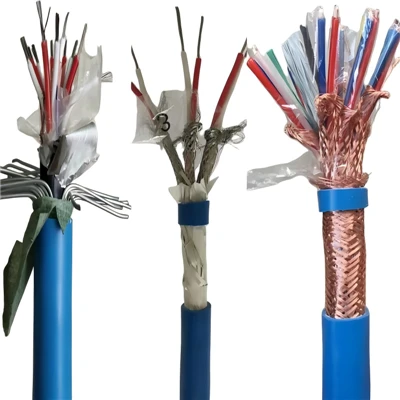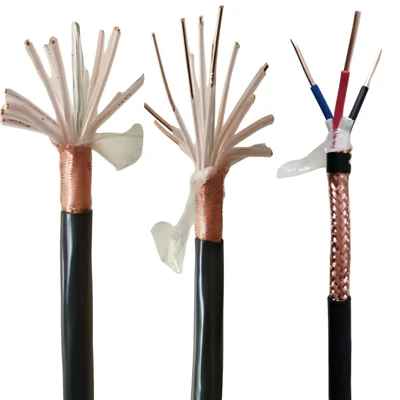

2.5 mm² SY Cable is designed for suitable industrial control wiring and equipment connection applications where conductor sizing, installation flexibility, and additional mechanical protection are important. Common SY cable constructions feature insulated conductors surrounded by a steel wire braid and an outer sheath.
The defining specification of this product is its 2.5 mm² nominal conductor cross-sectional area. However, the correct cable also depends on the number of cores, conductor material, rated voltage, insulation system, sheath material, installation environment, and applicable standards.
For buyers sourcing control cables for machinery, control equipment, and industrial installations, understanding these details helps avoid selecting a cable based on conductor size alone. Huawang's Control Cable range provides additional options for comparing cable constructions and application requirements.

2.5 mm² SY cable for suitable industrial control wiring and equipment connections.
1. Key Features of 2.5 mm² SY Cable
When evaluating 2.5 mm² SY cable, buyers should consider both its conductor specification and its protective construction.
- 2.5 mm² conductor size: Identifies the nominal cross-sectional area of each conductor, helping buyers match the cable to circuit requirements.
- Steel wire braided protection: Common SY cable designs incorporate a steel wire braid to provide an additional layer of mechanical protection.
- Multicore configuration: Available configurations depend on the manufacturer's product range and the required wiring arrangement.
- Flexible installation: Suitability for bending and movement depends on conductor stranding, cable construction, and the manufacturer's declared limits.
- Industrial wiring applications: May be considered for suitable machinery, control equipment, and auxiliary electrical connections when its ratings meet project requirements.
- Specification-based selection: Core count, voltage rating, insulation, sheath, and compliance requirements should be confirmed before ordering.
Important: These characteristics describe common SY cable designs. The final product specification must be verified against the actual cable offered for the project.
2. What Does 2.5 mm² Mean?
The term 2.5 mm² refers to the nominal cross-sectional area of an individual conductor. It does not describe the diameter of the complete cable or determine the number of cores.
For example, a designation such as 3 × 2.5 mm² generally indicates three conductors, each with a nominal cross-sectional area of 2.5 mm². A designation such as 4 × 2.5 mm² generally indicates four conductors of the same nominal size. These are examples of notation, not confirmation that every configuration is available in the specific SY cable range.
Why Conductor Size Matters
Conductor sizing affects electrical resistance and is an important input when assessing current-carrying capacity and voltage drop. However, the permissible current cannot be determined from the conductor area alone. It also depends on conductor material, insulation temperature rating, ambient temperature, cable grouping, installation method, and the number of loaded conductors.
For longer cable runs, the designer should also assess voltage drop based on circuit voltage, current, cable length, conductor resistance, and the applicable project requirements.
3. Typical Construction of SY Cable
Common SY cable constructions use several layers to provide electrical insulation and mechanical protection. The exact layer arrangement and materials must be confirmed from the manufacturer's technical datasheet.

Cross-sectional illustration of the cable layers. Ensure the image represents the actual product construction.
| Component | Function | Specification to Confirm |
|---|---|---|
| Conductor | Conducts electrical current through each core. | Conductor material, nominal cross-sectional area, and stranding. |
| Core insulation | Provides electrical separation between conductors. | Insulation material, thickness, temperature rating, and colour identification. |
| Core assembly | Arranges insulated conductors into a multicore cable. | Number of cores, core identification, and overall configuration. |
| Steel wire braid | Provides additional mechanical protection. | Braid material, coverage, and construction. |
| Outer sheath | Encloses and protects the cable assembly. | Sheath material, colour, dimensions, and environmental suitability. |
4. Why Is Steel Wire Braiding Important?
The steel wire braid is a distinguishing feature of many SY cable constructions. It creates an additional mechanical protective layer around the insulated cores and can help the cable withstand certain external handling and installation stresses.
Additional Mechanical Protection
During installation, cables may come into contact with cable routing hardware, adjacent components, or equipment surfaces. A suitably designed braid can provide additional protection against certain forms of mechanical interference. The actual level of protection depends on the braid design, coverage, outer sheath, and installation conditions.
Is Steel Wire Braiding the Same as Electrical Shielding?
No. Mechanical braiding and electrical shielding serve different purposes. The steel wire braid in a typical SY cable should not automatically be treated as an electromagnetic interference shield. If a control or signal circuit requires electrical screening, a cable with a specified shielding construction should be evaluated.
For comparison, see Huawang's Shielded Control Cable range and LiYCY Cable product page.
Is SY Cable Suitable for Every Harsh Environment?
No. Steel wire braiding does not by itself establish suitability for direct burial, permanent immersion, severe chemical exposure, outdoor ultraviolet exposure, continuous flexing, or high-impact conditions. These applications require confirmation of the complete cable construction and its documented performance ratings.
5. Applications of 2.5 mm² SY Cable
Potential applications depend on the cable's electrical rating, core count, protective construction, and installation conditions. Typical areas for evaluation include the following.
Industrial Machinery
Suitable SY cable configurations may be used for electrical connections between machinery components, auxiliary equipment, and control devices. Conductor size and core count must match the circuit design and equipment manufacturer's instructions.
Control Panels and Equipment Connections
Where permitted by the relevant wiring requirements, SY cable may be considered for connections between control equipment and external devices. Installers should verify the bending radius, cable entry arrangement, conductor identification, and rated voltage.
Production and Assembly Equipment
Manufacturing equipment often incorporates sensors, actuators, control units, and auxiliary electrical devices. A correctly specified multicore cable can support organised wiring, provided the number of conductors and the cable's movement capability meet the application requirements.
Technical and Commercial Equipment
Some technical equipment installations may use SY cable where the cable's documented ratings and construction are accepted by the project specification. Do not assume suitability for safety-critical circuits or regulated building wiring without explicit verification.
6. How to Select the Right 2.5 mm² SY Cable
Although the conductor size is stated in the product name, buyers should confirm the full technical specification before procurement.
| Selection Factor | What to Check | Why It Matters |
|---|---|---|
| Core count | Required number of conductors and core identification. | Must match the wiring diagram and connected equipment. |
| Conductor material | Specified copper or other approved conductor material. | Affects electrical resistance and product compliance. |
| Current and voltage | Load current, circuit voltage, voltage drop, and applicable rules. | Helps establish whether the cable is suitable for the circuit. |
| Insulation and sheath | Materials, temperature ratings, and environmental resistance. | Must suit the operating environment and installation conditions. |
| Mechanical protection | Braid construction and expected external stresses. | Helps determine whether the protective design meets the installation needs. |
| Cable movement | Fixed routing, occasional movement, continuous flexing, or torsion. | Not every flexible cable is suitable for dynamic applications. |
| Standards and approvals | Required product standards, certificates, and project approvals. | Ensures the cable meets the requirements of the target market. |
| Packaging and length | Required cut lengths, reels or coils, and identification markings. | Supports installation planning and delivery coordination. |
7. 2.5 mm² SY Cable Compared with Other Control Cables
Different cable constructions address different electrical and mechanical requirements. The following comparison is intended to help buyers identify which product specifications to review.
| Cable Type | Main Consideration | When to Evaluate It |
|---|---|---|
| 2.5 mm² SY Cable | 2.5 mm² conductor size with a commonly specified steel wire braided construction. | Suitable control and equipment connections where the documented cable ratings meet requirements. |
| Flexible Control Cable | Flexibility depends on conductor stranding, insulation, sheath, and rated movement. | Applications requiring flexible routing or equipment connections. |
| Shielded Control Cable | Uses a specified electrical shielding arrangement. | Circuits where electromagnetic interference protection is required. |
| LiYCY Cable | Commonly associated with screened flexible control and signal cable designs. | Suitable signal and control circuits when product ratings match the project. |
| SY Control Cable | Broader product family for comparing available SY cable configurations. | When comparing conductor sizes, core counts, and other available options. |
These cable types are not automatically interchangeable. Select the product based on the actual circuit, installation method, environmental requirements, and applicable standards.
8. Technical Specifications of 2.5 mm² SY Cable
The following table identifies the main parameters buyers should review. Unconfirmed values are intentionally marked for verification rather than presented as established product specifications.
| Parameter | Specification |
|---|---|
| Product name | 2.5 mm² SY Cable |
| Nominal conductor cross-sectional area | 2.5 mm² per conductor |
| Number of cores | To be confirmed |
| Conductor material | To be confirmed from the product datasheet |
| Conductor class and stranding | To be confirmed |
| Insulation material | To be confirmed |
| Braiding material and coverage | To be confirmed |
| Outer sheath material and colour | To be confirmed |
| Rated voltage | To be confirmed |
| Operating temperature range | To be confirmed |
| Overall cable diameter | Depends on core count and construction; confirm from datasheet |
| Minimum bending radius | To be confirmed for the actual installation conditions |
| Applicable standards and approvals | To be confirmed for the target market |
| Packaging and delivery length | To be confirmed according to order requirements |
9. Manufacturing Quality and Inspection
For industrial cable procurement, buyers should review the quality requirements and documentation applicable to the exact product being supplied. Useful inspection points include:
- Conductor verification: Confirm the specified material, nominal cross-sectional area, and conductor construction.
- Insulation inspection: Verify the insulation material and dimensions against the approved specification.
- Core identification: Check core colours or numbering against the required wiring configuration.
- Braid inspection: Review the steel wire braid construction and coverage against the product design.
- Sheath inspection: Check the specified material, appearance, dimensions, and required environmental performance.
- Electrical testing: Confirm the routine and type tests required by the applicable product standard or purchase contract.
- Documentation review: Verify datasheets, test reports, cable markings, and any required approvals.
Inspection methods and acceptance criteria should follow the agreed technical specification and applicable standards.
10. Packaging and Ordering Information
Before ordering 2.5 mm² SY cable, buyers should provide a complete technical description. This helps avoid confusion between products that share the same conductor size but differ in core count, insulation, sheath, or protective construction.
- Product designation and nominal conductor size: 2.5 mm² SY cable.
- Required number of cores and core identification.
- Conductor material and stranding requirements.
- Rated voltage and applicable standards.
- Insulation material, steel wire braid construction, and outer sheath requirements.
- Installation environment and any special mechanical or environmental requirements.
- Required cable length, packaging format, and delivery quantity.
- Required datasheets, test reports, markings, and project documentation.
Packaging formats, standard delivery lengths, and custom marking should be confirmed with the actual supplier before the purchase order is finalised.
11. Frequently Asked Questions
What does 2.5 mm² mean in SY cable?
It refers to the nominal cross-sectional area of each conductor, not the outside diameter of the complete cable. The finished cable diameter depends on the number of cores and the construction of its insulation, braid, and sheath.
What is the main purpose of the steel wire braid?
The braid provides additional mechanical protection. It should not automatically be treated as an electrical screen or as proof that the cable is suitable for direct burial, severe impact, or every outdoor environment.
How many cores are available in 2.5 mm² SY cable?
Core-count availability depends on the manufacturer's product range. The required number of cores should be determined from the circuit diagram and confirmed against the available product specification.
Can 2.5 mm² SY cable be used for power supply?
Only when its documented voltage rating, current-carrying capacity, installation conditions, and applicable electrical requirements make it suitable for the intended circuit. The conductor size and SY designation alone are not enough to approve a cable for a particular power application.
Is SY cable suitable for continuous movement?
Not necessarily. A cable suitable for flexible routing or occasional movement may not be designed for continuous flexing, torsion, or drag-chain service. Confirm the manufacturer's declared movement capability and minimum bending radius.
Does SY cable provide electromagnetic interference protection?
The steel wire braid in typical SY cable is primarily a mechanical protective feature. If electromagnetic interference protection is required, specify an appropriate electrical shielding construction and verify its performance documentation.
What information is required to order 2.5 mm² SY cable?
Confirm the number of cores, conductor material, voltage rating, insulation and sheath materials, braid construction, applicable standards, cable length, packaging, and installation conditions. Product-specific technical documentation should be reviewed before the order is approved.
12. Related Control Cable Products
Explore these related pages to compare cable constructions and identify the most suitable product for your installation:
- SY Control Cable – review the broader SY cable product family.
- Flexible Control Cable – compare cable options for flexible routing.
- Shielded Control Cable – explore cables with specified electrical shielding.
- LiYCY Cable – compare screened control and signal cable options.
- Control Cable Category – browse other industrial control cable products.
Final selection note: The core specification of this product is a 2.5 mm² nominal conductor cross-sectional area combined with the required SY cable construction. Confirm the actual core count, conductor material, voltage rating, insulation, braid design, sheath, and compliance requirements before publication and procurement.
Hot Tags: 2.5 mm SY cable, 2.5mm SY cable, SY control cable, 2.5 mm² control cable, flexible SY cable, steel wire braided cable, SY cable specifications, industrial control cable, SY cable manufacturer, 10 core control cable, 6 core control cable, PVC Control Cable, Silicone Wire Cable, Steel Tape Armoured Cable, xlpe control cable