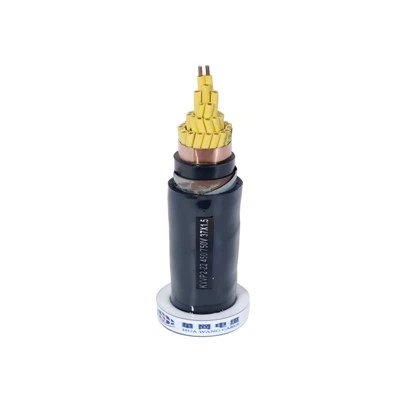

Hey there! I'm a supplier of Steel Tape Armoured Cables, and I often get asked about how to calculate the cable size for a Steel Tape Armoured Cable installation. It's a crucial step in any electrical project, as choosing the right cable size ensures safety, efficiency, and longevity. So, let's dive right into it!
Understanding the Basics
Before we start calculating the cable size, we need to understand a few basic concepts. The cable size is determined by several factors, including the load current, the length of the cable, the voltage drop, and the ambient temperature.
The load current is the amount of current that the cable will carry. It's usually measured in amperes (A). The length of the cable is the distance between the power source and the load. The voltage drop is the decrease in voltage that occurs as the current flows through the cable. It's usually measured in volts (V). The ambient temperature is the temperature of the environment where the cable will be installed.
Step 1: Determine the Load Current
The first step in calculating the cable size is to determine the load current. This can be done by adding up the currents of all the electrical devices that will be connected to the cable. For example, if you have a lighting system that draws 5 A and a motor that draws 10 A, the total load current will be 15 A.
It's important to note that the load current can vary depending on the type of electrical device. Some devices, such as motors, have a high starting current, which can be several times higher than the normal operating current. In these cases, you need to take the starting current into account when calculating the cable size.
Step 2: Calculate the Voltage Drop
The next step is to calculate the voltage drop. The voltage drop is caused by the resistance of the cable. The resistance of the cable depends on its length, cross-sectional area, and material.
The formula for calculating the voltage drop is:
Vd = (2 x L x I x R) / 1000
where Vd is the voltage drop in volts, L is the length of the cable in meters, I is the load current in amperes, and R is the resistance of the cable in ohms per kilometer.
The resistance of the cable can be found in the cable manufacturer's specifications. It's usually given in ohms per kilometer for a specific cross-sectional area and material.
For example, let's say you have a cable that is 100 meters long, the load current is 15 A, and the resistance of the cable is 1.5 ohms per kilometer. Using the formula above, the voltage drop would be:
Vd = (2 x 100 x 15 x 1.5) / 1000 = 4.5 V
The maximum allowable voltage drop depends on the application. In general, the voltage drop should not exceed 3% for lighting circuits and 5% for power circuits.
Step 3: Consider the Ambient Temperature
The ambient temperature can affect the performance of the cable. As the temperature increases, the resistance of the cable also increases, which can lead to a higher voltage drop.


Most cable manufacturers provide derating factors for different ambient temperatures. These factors are used to adjust the cable's current-carrying capacity based on the ambient temperature.
For example, if the ambient temperature is 40°C and the cable is rated for a maximum temperature of 70°C, the derating factor might be 0.8. This means that the cable's current-carrying capacity needs to be reduced by 20%.
Step 4: Select the Cable Size
Once you have determined the load current, calculated the voltage drop, and considered the ambient temperature, you can select the appropriate cable size.
Cable sizes are usually specified in square millimeters (mm²). The larger the cross-sectional area of the cable, the lower its resistance and the higher its current-carrying capacity.
You can use a cable sizing chart provided by the cable manufacturer to select the appropriate cable size based on the load current, voltage drop, and ambient temperature.
Other Considerations
In addition to the factors mentioned above, there are a few other things to consider when calculating the cable size for a Steel Tape Armoured Cable installation.
- Cable Type: Different types of cables have different characteristics and performance. For example, Copper Tape Shielded Cable provides better electromagnetic shielding, while PVC Insulated Control Cable is more flexible and easier to install.
- Installation Method: The installation method can also affect the cable size. For example, if the cable is installed in a conduit or trunking, the heat dissipation may be reduced, which can increase the temperature of the cable. In these cases, you may need to select a larger cable size to compensate for the reduced heat dissipation.
- Future Expansion: It's always a good idea to consider future expansion when selecting the cable size. If you anticipate adding more electrical devices in the future, you may want to select a larger cable size to accommodate the additional load.
Conclusion
Calculating the cable size for a Steel Tape Armoured Cable installation is a complex process that requires careful consideration of several factors. By following the steps outlined above and considering the other factors mentioned, you can select the appropriate cable size to ensure the safety, efficiency, and longevity of your electrical system.
If you have any questions or need further assistance with calculating the cable size or selecting the right cable for your project, feel free to reach out. We're here to help you make the best decision for your electrical needs. Whether you're working on a small residential project or a large commercial installation, we have the expertise and the products to meet your requirements. So, don't hesitate to contact us for a quote or to discuss your project in more detail.
References
- Electrical Installation Guide, various editions
- Cable Manufacturer's Technical Specifications