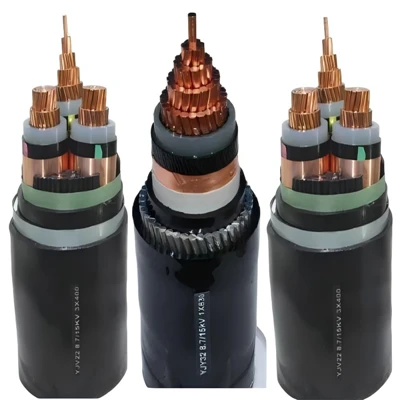

XLPE Insulated Power Cable is designed for electrical energy transmission and distribution in industrial facilities, commercial buildings, infrastructure projects, and other electrical installations. XLPE, or cross-linked polyethylene, is used as the primary insulation material to provide electrical insulation and thermal performance appropriate to the cable's specified design.
For electrical contractors, distributors, engineering companies, and project procurement teams, selecting the right XLPE insulated power cable involves more than choosing an insulation material. Conductor material, conductor cross-sectional area, rated voltage, number of cores, outer sheath, mechanical protection, installation conditions, and applicable standards must all be considered together.
Depending on the project requirements and available product design, XLPE power cables can be specified with copper or aluminium conductors, different core configurations, and suitable outer sheath or armour options. The final construction should be confirmed against the manufacturer's technical documentation before ordering.

1. Product Overview
XLPE insulated power cable is an electrical cable in which cross-linked polyethylene provides the main insulation around the conductor. The conductor carries electrical current, while the insulation separates the conductor from other conductors and surrounding conductive components.
Additional cable layers may be incorporated according to the intended voltage level, installation environment, and mechanical protection requirements. Depending on the design, these may include conductor screens, insulation screens, bedding, metallic armour, and an outer protective sheath. Not every XLPE cable contains all these layers.
For many low-voltage fixed-installation designs, the construction may consist of a copper or aluminium conductor, XLPE insulation, suitable filling or binding materials for multicore designs, and an outer sheath. Higher-voltage designs can require additional electrical stress-control layers and metallic screening systems.
It is therefore important to identify the required cable type before finalizing a specification. XLPE describes the insulation material; it does not, by itself, define the voltage rating, conductor material, armour type, fire performance, or complete cable construction.
Typical Product Construction
| Cable Component | Possible Construction | Function |
|---|---|---|
| Conductor | Copper or aluminium, subject to the selected design | Transmits electrical current |
| Conductor screen | Included where required by the voltage class and design | Helps control electrical stress around the conductor in applicable designs |
| Insulation | Cross-linked polyethylene (XLPE) | Provides the primary electrical insulation |
| Insulation screen | Included where required by the voltage class and design | Helps manage the electrical field around the insulation in applicable designs |
| Filling and binding layers | Used where required in multicore cable constructions | Help maintain cable geometry and organize the core assembly |
| Armour | Optional, depending on the selected cable construction | Provides specified mechanical protection |
| Outer sheath | Selected according to the application and product specification | Protects the cable against relevant environmental and installation stresses |
Note: The table describes possible cable components rather than a guaranteed construction for every product. The actual layer sequence and materials must be verified against the approved cable drawing or datasheet.
2. Main Features of XLPE Insulated Power Cable
2.1 Electrical Insulation Performance
XLPE is widely used in power cable insulation because of its electrical properties and suitability for properly engineered cable designs. The insulation thickness and construction must be matched to the rated voltage and applicable product standard.
For buyers, the important consideration is not simply whether a cable uses XLPE, but whether its complete insulation system is designed and tested for the intended electrical duty. Rated voltage, insulation dimensions, manufacturing quality, and relevant electrical tests should be reviewed together.
2.2 Thermal Performance
XLPE insulation is commonly used in cable designs that require suitable operating-temperature performance. The permitted conductor temperature depends on the cable design, applicable standard, installation conditions, and manufacturer's declared ratings.
When selecting a cable for a high-load circuit, buyers should consider conductor size, ambient temperature, installation method, grouping with other loaded cables, and heat dissipation. The cable's permissible current-carrying capacity must be determined using the appropriate technical data rather than insulation material alone.
2.3 Copper or Aluminium Conductor Options
Copper and aluminium conductors can both be used in XLPE insulated power cable designs. Copper generally offers higher electrical conductivity for the same conductor cross-sectional area, while aluminium can reduce conductor weight and may offer a different material-cost balance.
The correct choice depends on electrical load, conductor sizing, installation conditions, connection equipment, mechanical considerations, and project requirements. A comparison should use electrically appropriate conductor sizes rather than assuming that copper and aluminium conductors of identical cross-sectional area perform identically.
2.4 Multiple Core Configurations
XLPE power cables can be designed with different numbers of cores to suit the electrical system. Single-core cables may be used for particular distribution arrangements, while multicore cables can combine several conductors within one cable assembly.
Core count should be selected according to the circuit configuration, phase arrangement, neutral requirements, protective conductor requirements, and local electrical regulations. The conductor sizes and identification system must also match the project drawings.
2.5 Optional Mechanical Protection
Where a cable route exposes the cable to a defined risk of mechanical damage, an armoured construction may be appropriate. The required armour type depends on the installation method, expected mechanical stresses, and cable design.
Armour is not automatically required for every XLPE power cable. Protected indoor installations, cable-tray routes, ducts, and underground routes can have different mechanical protection requirements. Direct burial should only be specified when the complete cable construction and installation method are suitable for it.
3. Technical Specifications
The following table identifies the principal parameters that should be confirmed when ordering an XLPE insulated power cable. Because the product title describes a cable family rather than one fully defined design, project-specific values must be confirmed before manufacture.
| Parameter | Specification or Selection Requirement |
|---|---|
| Product name | XLPE Insulated Power Cable |
| Application | Electrical power transmission and distribution, subject to the selected design |
| Conductor material | Copper or aluminium, to be confirmed |
| Conductor construction | Solid or stranded construction, according to the applicable design and standard |
| Number of cores | To be selected according to the circuit requirements |
| Conductor cross-sectional area | To be selected according to load, voltage drop, installation conditions, and applicable regulations |
| Insulation material | Cross-linked polyethylene (XLPE) |
| Rated voltage | Must be confirmed for the selected cable design |
| Outer sheath | To be specified according to the installation environment and product design |
| Armour | Optional where offered and required by the application |
| Maximum conductor operating temperature | Refer to the approved datasheet for the selected cable |
| Applicable standard | To be agreed according to the project specification and available product certification |
| Testing requirements | To be confirmed according to the applicable product standard and purchase specification |
| Packaging | To be confirmed according to cable size, length, transport method, and order requirements |
Why Rated Voltage and Conductor Size Matter
The rated voltage determines whether a cable is suitable for the intended electrical system. The conductor cross-sectional area affects electrical resistance, current-carrying capacity, voltage drop, and thermal performance.
For power distribution projects, conductor sizing should consider the expected load, circuit length, installation method, ambient temperature, grouping, protective devices, and any applicable derating factors. A cable should not be selected solely by matching its nominal cross-sectional area to a general application description.
For projects involving a defined international standard, the buyer should identify the required standard and edition in the purchase specification. Any requested compliance or certification should be confirmed for the actual cable design and manufacturing scope.
4. Applications of XLPE Insulated Power Cable
4.1 Industrial Plants and Manufacturing Facilities
Industrial facilities require electrical power for production equipment, utility systems, distribution panels, and supporting infrastructure. XLPE insulated power cables may be suitable for these systems when the cable rating and construction match the electrical load and installation conditions.
When planning an industrial installation, evaluate cable routing, ambient temperature, grouping, mechanical exposure, and access for maintenance. Where machinery creates vibration or movement, the suitability of the selected cable and its termination arrangements must be assessed separately.
4.2 Commercial and Institutional Buildings
Commercial buildings and institutional facilities use power cables for electrical distribution and equipment supplies. Selection may be affected by installation routes, building regulations, fire-safety requirements, and the design of the electrical distribution system.
Where a project specifies low-smoke, halogen-free, flame-retardant, or fire-resistant performance, those requirements must be stated separately and verified against the relevant test standards. XLPE insulation alone does not establish that a cable meets these additional fire-performance requirements.
4.3 Power Distribution Infrastructure
XLPE insulated cables are used in power distribution systems across different voltage classes. The construction required for a low-voltage distribution circuit may differ significantly from that required for a medium-voltage network.
For medium-voltage and higher-voltage designs, electrical stress control, conductor and insulation screens, metallic screens, earthing arrangements, accessories, and installation practices become particularly important. These products must be selected and installed in accordance with the relevant design requirements.
4.4 Underground and Duct Installations
Underground and duct installations can expose cables to moisture, installation forces, soil conditions, and mechanical risks. The cable sheath, armour, water-blocking provisions, and other construction features should be selected according to the actual route and environmental requirements.
Do not assume that every XLPE insulated cable is suitable for direct burial or underwater use. Confirm the complete cable construction, environmental suitability, installation instructions, and applicable standard before specifying it for these conditions.
4.5 Infrastructure and Utility Projects
Infrastructure projects may use power cables in utility facilities, transportation infrastructure, water treatment installations, and other engineered electrical systems. Procurement requirements can include defined conductor sizes, approved construction drawings, traceable test records, specified standards, and controlled delivery documentation.
For project-based orders, the cable specification should be aligned with the approved electrical design and bill of quantities. Any substitutions should be reviewed by the responsible project engineer before procurement or installation.

5. How to Select the Right XLPE Power Cable
Step 1: Identify the System Voltage
Confirm the system voltage and required cable voltage designation. Make sure the cable is designed for the applicable electrical system and installation category. Do not infer the voltage rating from the term XLPE alone.
Step 2: Calculate the Required Conductor Size
Determine the expected load current and circuit length. Consider allowable voltage drop, installation method, conductor material, ambient conditions, cable grouping, and local electrical regulations. Final conductor sizing should be checked against the applicable design rules and cable manufacturer's data.
Step 3: Choose Copper or Aluminium
Compare conductor material options based on electrical performance, weight, cost, installation requirements, and termination compatibility. Where aluminium conductors are considered, confirm that connectors and installation procedures are suitable for the selected conductor.
Step 4: Decide the Number of Cores
Use the circuit diagram to determine the number of phase conductors and whether neutral and protective conductors are required within the cable. Confirm core identification and conductor sizes against the project specification.
Step 5: Evaluate the Installation Environment
Identify whether the cable will be installed indoors, outdoors, in a cable tray, in a conduit, underground, or in another environment. Consider temperature, moisture, ultraviolet exposure, chemicals, abrasion, impact, and mechanical loading where relevant.
Step 6: Determine Whether Armour Is Required
Assess the risk of mechanical damage along the cable route. If armour is needed, select a construction suited to the installation method and specified mechanical requirements. Also confirm the earthing and bonding arrangements where applicable.
Step 7: Confirm Standards and Documentation
Specify the applicable product standard, inspection requirements, test documentation, cable marking, and any required certificates. Confirm that the manufacturer can supply the exact construction and documentation required by the project.
6. XLPE Insulated Power Cable vs PVC Insulated Power Cable
XLPE and PVC are different insulation materials used in electrical cable designs. The most suitable option depends on the required electrical performance, thermal rating, environmental conditions, cost, and applicable regulations.
| Comparison Factor | XLPE Insulated Cable | PVC Insulated Cable |
|---|---|---|
| Insulation material | Cross-linked polyethylene | Polyvinyl chloride |
| Thermal characteristics | Can support higher conductor temperature ratings in suitable designs | Temperature rating depends on the specific PVC compound and cable design |
| Electrical performance | Suitable for a wide range of power cable designs when engineered to the required rating | Suitable for many general electrical applications when engineered to the required rating |
| Flexibility | Depends on conductor construction, insulation geometry, and complete cable design | Depends on conductor construction, PVC compound, and complete cable design |
| Cost considerations | Depends on the complete construction and required performance | Depends on the complete construction and required performance |
| Selection basis | Rated voltage, temperature, installation conditions, and project specification | Rated voltage, temperature, installation conditions, and project specification |
Neither insulation material should be considered universally better for every application. The comparison must use cables with appropriate ratings and comparable construction. For a related product, see Huawang's Power Cable range.
7. Manufacturing and Quality Control Considerations
Consistent cable performance depends on appropriate material selection, controlled manufacturing processes, dimensional accuracy, and the tests required by the applicable standard. For an XLPE insulated power cable, quality checks should be defined for the actual cable design rather than assumed from the product name.
Conductor Inspection
Conductor material, cross-sectional area, construction, and relevant electrical properties should be checked against the approved specification. Conductor quality directly affects the electrical characteristics of the finished cable.
Insulation Processing
XLPE insulation must be manufactured and processed according to the selected cable design and applicable production requirements. Relevant checks may include insulation dimensions, material condition, concentricity, and the inspections or tests required by the product standard.
Cable Assembly and Sheathing
For multicore cables, the core assembly, filling or binding layers, and outer sheath should match the approved construction. Where armour or screening is specified, the relevant materials and dimensions should be verified as part of the manufacturing process.
Final Inspection and Testing
The final inspection plan should be based on the applicable standard and agreed purchase specification. Depending on the product design, required checks may include conductor-related tests, dimensional inspections, insulation tests, voltage tests, and other specified routine or type tests.
Buyers should request the relevant datasheet, test records, and certificates where required. Any statement about a certification, test result, or compliance level should be supported by documentation applicable to the actual product.
8. Customization Options
XLPE insulated power cable requirements vary between electrical distribution projects, industrial facilities, and infrastructure installations. Available customization must be confirmed against the manufacturer's production capabilities and approved product designs.
| Customization Item | Information to Confirm |
|---|---|
| Conductor material | Copper or aluminium, according to the required design |
| Conductor size | Required cross-sectional area and conductor class |
| Core configuration | Number of cores, conductor arrangement, and identification requirements |
| Rated voltage | Required system voltage and applicable cable voltage designation |
| Outer sheath | Required sheath material and environmental performance |
| Armour and screening | Whether mechanical protection or electrical screening is required |
| Cable marking | Required identification, marking text, and applicable standard |
| Packaging and length | Required cable length, reel or drum arrangement, and shipping conditions |
9. Packaging, Storage, and Delivery
Power cable packaging should protect the cable during handling, storage, and transportation. The appropriate packaging method depends on cable diameter, total length, weight, bending limitations, and the shipping method.
Packaging Requirements
- Confirm the required cable length and whether multiple lengths are acceptable.
- Select a suitable reel, drum, or other approved packaging arrangement for the cable dimensions and weight.
- Protect cable ends against moisture and contamination during storage and transportation.
- Ensure that cable labels and reel identification correspond to the purchase specification and shipping documents.
Storage and Handling
Store cable reels in accordance with the manufacturer's handling and storage instructions. Protect the cable from avoidable physical damage, contamination, and unsuitable environmental exposure. During installation, observe the specified bending radius and pulling limitations to avoid damaging the cable structure.
Delivery Documentation
For project orders, buyers should confirm the required packing list, product identification, datasheets, inspection records, certificates, and other documentation before shipment. Delivery arrangements and lead times should be confirmed for the actual order quantity, cable specification, and destination.
10. Ordering Information
To specify an XLPE insulated power cable accurately, prepare the following information for technical review:
- Application and installation environment.
- System voltage and required cable rating.
- Conductor material and cross-sectional area.
- Number of cores and conductor configuration.
- Required insulation, sheath, armour, and screening construction.
- Applicable standard and any project-specific testing requirements.
- Required cable lengths, packaging, and delivery destination.
For projects with an approved cable schedule or specification sheet, use that document as the primary reference. Confirm all deviations, substitutions, and optional construction features before production.
11. Frequently Asked Questions
What is an XLPE insulated power cable?
An XLPE insulated power cable is an electrical cable that uses cross-linked polyethylene as its primary insulation material. It is used for power transmission and distribution in cable designs suited to the required voltage and installation conditions.
What does XLPE stand for?
XLPE stands for cross-linked polyethylene. The cross-linking process changes the polymer structure and supports the thermal and electrical characteristics required in suitable power cable insulation systems.
Is XLPE power cable suitable for industrial use?
Yes, XLPE insulated power cables are used in many industrial power distribution applications. The selected cable must have the correct voltage rating, conductor size, sheath construction, and environmental suitability for the installation.
Can XLPE insulated power cables use copper or aluminium conductors?
Both copper and aluminium conductors are used in XLPE power cable designs. The appropriate material depends on the electrical load, conductor sizing, installation requirements, connection equipment, and project specification.
Is every XLPE insulated power cable armoured?
No. Armour is an optional construction feature where the product design and installation requirements call for additional mechanical protection. Unarmoured and armoured cables serve different installation needs, so the cable route and risk of mechanical damage should be assessed before selection.
Can XLPE power cable be installed underground?
Some XLPE power cable constructions are suitable for underground installation, but suitability depends on the complete cable design and installation method. Confirm the sheath, armour or other protection, environmental requirements, and manufacturer's installation instructions before specifying direct burial.
Does XLPE insulation automatically make a cable fire-resistant?
No. XLPE insulation alone does not establish flame-retardant, fire-resistant, or low-smoke, zero-halogen performance. These characteristics require the appropriate cable construction and verification against the relevant test requirements.
What information is needed to select an XLPE power cable?
The key information includes rated voltage, conductor material, conductor size, number of cores, installation method, environmental conditions, sheath and armour requirements, and applicable standards. For power circuits, load current, circuit length, and installation conditions are also important for conductor sizing.
What is the difference between XLPE insulated and XLPE insulated armoured power cable?
XLPE insulated power cable identifies the insulation material but does not specify whether armour is included. An XLPE insulated armoured power cable includes an additional armour layer designed to provide specified mechanical protection. The armour type and overall construction must be confirmed in the product specification.
How can buyers verify the cable's technical compliance?
Review the approved datasheet, construction drawing, applicable standard, test documentation, and certificates required by the project. Confirm that the documents correspond to the exact cable construction and rating being purchased.
12. Related Power Cable Products
Different electrical projects may require different conductor materials, sheath constructions, mechanical protection, or fire-performance characteristics. Review the relevant product details before selecting a cable.
- Power Cable – Explore the broader range of power cable solutions.
- Armoured Power Cable – Review a specific armoured XLPE power cable construction.
- Control Cable – Explore cables designed for industrial control circuits rather than general power distribution.
Technical note: XLPE insulated power cables are available in different designs and voltage classes. Always confirm the actual conductor construction, rated voltage, insulation system, sheath, mechanical protection, applicable standard, and installation requirements before placing an order.
Hot Tags: XLPE power cable, XLPE insulated electrical cable, industrial power cable, XLPE cable manufacturer, copper conductor XLPE cable, aluminium conductor XLPE cable, XLPE cable specifications, XLPE insulated armoured cable, 2 power cable, long power cable, nema power cable, power cable multiple, power on cable, xlpe insulated armoured cable