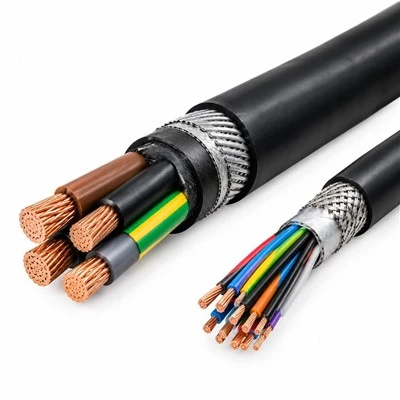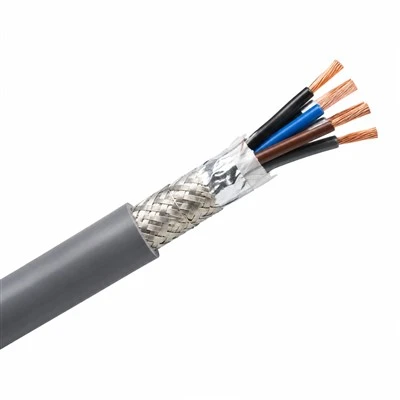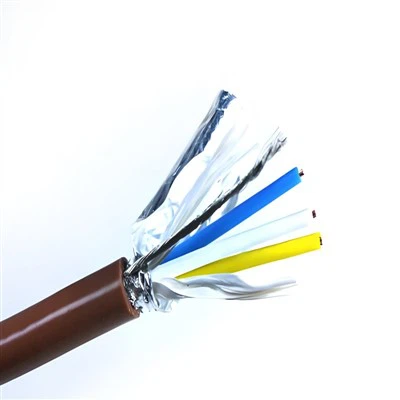

Industrial equipment rarely relies on a single electrical connection. A machine may need separate conductors for start and stop commands, limit switches, position feedback, interlocks, alarms and auxiliary control circuits. Running an individual cable for every connection can increase cable routing complexity and make panel wiring harder to organize. A Multicore Control Cable provides a practical way to bring multiple control conductors together within one cable assembly.
For industrial buyers, the main question is not simply how many cores a cable contains. The more important question is whether the conductor arrangement, electrical characteristics, insulation system and outer protection match the connected equipment and installation environment. A multicore cable selected for stationary machinery may not be appropriate for a continuously moving cable carrier, and a cable designed for general control circuits may not meet the requirements of a sensitive communication interface.
Huawang Cable's multicore control cable offering should therefore be specified around the customer's circuit diagram, required core count, conductor cross-sectional area, installation method and applicable standards. The final construction and available options must be confirmed against the manufacturer's current product specification before ordering.

What Is a Multicore Control Cable?
A multicore control cable is an electrical cable containing multiple insulated conductors within a shared cable construction. It is used to connect control circuits and related electrical components in machinery, automation equipment, control cabinets and industrial installations.
Each core can serve a designated function within the circuit. Depending on the system design, conductors may carry switching commands, sensor outputs, relay signals, interlock circuits or other control-related electrical signals. The exact role of each conductor is established by the wiring diagram and equipment requirements.
The term multicore describes the cable's construction rather than one fixed electrical specification. Two multicore control cables can differ substantially in core count, conductor size, insulation material, screening, flexibility and sheath composition. Consequently, a cable with the correct number of cores is not automatically suitable for every control application.
For example, a stationary machine with several limit switches may require a different construction from a robotic system that repeatedly bends the cable. Similarly, a control circuit operating near variable-speed drives may need different electromagnetic compatibility measures from a simple relay circuit in a protected cabinet.
How the Multicore Construction Helps Organize Control Wiring
The main practical advantage of a multicore control cable is that several electrical paths can be routed together. Instead of managing numerous separate cables between a machine and its control panel, the installer can use one appropriately specified multicore cable where the circuit design permits it.
Consider a conveyor system with a motor contactor, emergency interlocks, travel limit switches and status feedback. The electrical design may allocate separate cores to different control functions. At the cabinet, the conductors are terminated at the designated terminals and identified according to the wiring diagram. At the machine end, the corresponding conductors connect to the relevant field devices.
This arrangement can simplify cable routing and make the installation easier to label and inspect. It does not eliminate the need for correct circuit separation, suitable protection or accurate termination. Each core must still be matched to its assigned electrical function.
Why core identification matters
Core identification affects installation accuracy and future maintenance. Colour-coded or numbered cores can help technicians trace individual circuits, troubleshoot faults and replace components without unnecessarily disturbing other connections. The appropriate identification method should be agreed with the customer and should comply with the applicable wiring requirements.
For larger control systems, the buyer should provide a wiring diagram or core schedule whenever possible. This helps establish the required number of conductors, identify spare cores and reduce ambiguity during manufacturing and installation.
Multicore Control Cable Construction
The following construction elements are common considerations when specifying an industrial multicore control cable. Their exact materials and dimensions vary by product design and must be confirmed for the cable being purchased.
| Component | Technical Function | Selection Considerations |
|---|---|---|
| Copper conductor | Carries current or electrical control signals. | Conductor material, cross-sectional area, stranding, resistance and applicable conductor class. |
| Individual core insulation | Provides electrical insulation between each conductor and adjacent components. | Material, thickness, rated voltage, operating temperature and relevant electrical requirements. |
| Core identification | Distinguishes individual conductors during connection and maintenance. | Colour coding, numbered cores or another agreed identification system. |
| Core assembly | Groups the insulated conductors into a common cable construction. | Core count, arrangement, cable geometry and any required fillers or binders. |
| Screening, if specified | Helps control electromagnetic interference in applications that require it. | Foil or braid construction, screening requirements, termination and grounding arrangements. |
| Inner sheath or covering, if required | Separates or supports internal cable elements in certain designs. | Required mechanical construction and compatibility with the outer sheath. |
| Outer sheath | Protects the cable assembly against mechanical and environmental exposure appropriate to its design. | Material, abrasion resistance, oil exposure, UV exposure, flame requirements and installation conditions. |
Conductor material and cross-sectional area
Copper is widely used in control cable conductors because of its electrical conductivity and established use in industrial wiring. The required cross-sectional area depends on circuit current, conductor resistance, cable length, allowable voltage drop, installation conditions and applicable standards.
A larger conductor is not automatically the best choice for every control circuit. Oversizing may increase cable diameter, material consumption and termination requirements, while undersizing may result in excessive voltage drop or inadequate current-carrying capacity. The correct size should be determined from the circuit design rather than selected solely by machine type.
Insulation and outer sheath are different components
Individual core insulation separates the conductors electrically. The outer sheath protects the assembled cable from the environment and mechanical exposure appropriate to its intended use. These layers have different functions and should not be treated as interchangeable.
PVC, XLPE, LSZH and other material systems may be considered for different cable designs, but their suitability depends on the actual compound, product construction and required performance. The presence of a particular material name alone does not establish a specific temperature rating, flame classification or resistance to oil and chemicals.
How to Choose the Right Core Count
Core count should follow the electrical design. Choosing a cable based only on a commonly used core configuration can lead to unused conductors, insufficient connections or unnecessary installation costs.
| Typical Circuit Situation | What to Count | Important Check |
|---|---|---|
| Basic machine control | Required control connections, return paths and any specified common conductors. | Verify the wiring diagram and circuit architecture. |
| Machine with multiple sensors | Signal connections, supply conductors where required and return paths. | Check sensor output type and the controller's connection requirements. |
| Conveyor or material-handling equipment | Start/stop circuits, interlocks, limit switches and status feedback. | Confirm the number of independent circuits and whether separate cable routes are required. |
| Automation cabinet connections | All designated field connections between equipment and terminals. | Check terminal layout, core identification and panel wiring requirements. |
| System with anticipated expansion | Current connections plus any justified spare conductors. | Balance future flexibility against cable size, cost and installation space. |
Where spare cores are included, their number should be based on a defined project requirement. Too few may require additional cabling if the system expands; too many can increase cable diameter and termination effort without meaningful benefit.
For projects that need a specific four-conductor configuration, see Huawang Cable's 4 Core Control Cable page. A four-core cable is one possible configuration within the broader multicore category, not a substitute for determining the actual circuit requirements.
Fixed Installation or Continuous Flexing?
The way a cable moves during operation has a direct influence on its construction requirements. A cable installed once inside a protected cabinet experiences a different mechanical environment from a cable repeatedly bending with a moving machine component.
Fixed industrial installations
Fixed installations may include control wiring between a machine and a control cabinet, cable routes on trays, or wiring within an equipment enclosure. Selection should account for the installation method, ambient temperature, mechanical protection and the relevant electrical requirements.
For fixed wiring, the buyer should also consider how the cable will be supported, routed and terminated. Bending radius, entry glands and protection at sharp edges can affect installation quality even when the cable's electrical specification is correct.
Moving machinery and cable carriers
Applications involving repeated bending require more than a generic description such as "flexible cable." The cable must be designed and qualified for the intended movement, bending radius, travel distance and operating cycle. Torsion, acceleration, temperature and exposure to oils or coolants may introduce additional requirements.
A cable suitable for occasional repositioning should not automatically be treated as suitable for continuous flexing. For applications involving frequent movement, review Huawang Cable's Flexible Control Cable range and confirm the applicable movement rating with the manufacturer.
Does a Multicore Control Cable Need Shielding?
Not every multicore control circuit requires a metallic screen. Screening should be considered when the electrical environment or system specification identifies an electromagnetic compatibility requirement.
Potential interference sources include variable-speed drives, switching power equipment, motors and other electrical systems. Whether interference becomes a practical problem depends on the source, frequency, coupling path, cable routing, signal characteristics and equipment immunity.
Where screening is specified, the design may use foil, metallic braid or another approved construction. Screen continuity and termination must be considered alongside cable routing and grounding. A screened cable cannot by itself guarantee immunity from electromagnetic interference.
Buyers evaluating screened constructions can review Huawang Cable's Shielded Control Cable page. Confirm the actual screen material, coverage requirements and termination method before approving a cable for a noise-sensitive application.
Industrial Applications of Multicore Control Cable
Manufacturing machinery and production lines
Production equipment may contain sensors, limit switches, relays, interlocks and control-panel connections. A multicore control cable can consolidate suitable circuits into a common route, helping organize wiring between field devices and the control system.
The main selection questions are the number of independent circuits, conductor size, installation method and proximity to power equipment. If the cable passes through moving machine sections, the required flexing performance must also be considered.
Conveyor and material-handling systems
Conveyors often use distributed devices to monitor position, detect products and control movement. Core allocation should reflect the actual field devices and controller architecture. Cable routing must also accommodate the equipment layout, service access and any moving sections.
Where a conveyor operates in a dusty, oily or mechanically exposed environment, the outer sheath and installation protection should be selected for the conditions that the cable will actually encounter.
Process equipment and instrumentation
Process machinery may require connections for valve position feedback, auxiliary control circuits, alarms and discrete sensor signals. These applications need careful separation between ordinary control wiring and sensitive measurement or communication circuits.
A multicore control cable should not automatically be specified for every instrumentation signal. Some analog measurements, communication links or specialized sensors require defined cable characteristics, individual pair screening or other dedicated constructions. The instrument and control-system documentation should determine the appropriate product.
Building services and equipment control
Building equipment such as ventilation units, pumps and mechanical control systems may contain multiple switching, status and interlock circuits. A multicore cable can be appropriate when the electrical design permits the circuits to share one cable assembly and the insulation and installation requirements are satisfied.
Where the installation is subject to specific fire, smoke or building-code requirements, the required cable classification should be confirmed separately. A generic industrial control cable description is not sufficient evidence of compliance.

Multicore Control Cable Specification Checklist
For a manufacturer to evaluate a project accurately, the inquiry should contain enough information to distinguish the required cable from other products in the same category.
| Item | Information to Confirm |
|---|---|
| Core count | Required number of insulated conductors, including any designated spare cores. |
| Conductor size | Required cross-sectional area or AWG size, based on the circuit design. |
| Conductor construction | Solid or stranded conductor and any specified conductor class. |
| Electrical rating | Rated voltage and applicable current, resistance or signal requirements. |
| Insulation material | Specified insulation type and required temperature or electrical performance. |
| Screening | Whether a screen is required and, if so, the specified construction. |
| Outer sheath | Required material and verified mechanical, environmental and fire performance. |
| Installation | Fixed or moving use, indoor or outdoor route, conduit, tray and mechanical exposure. |
| Standards and documents | Applicable product standards, drawings, approval documents and test requirements. |
| Order details | Required length, total quantity, cable marking, packaging and delivery requirements. |
Where possible, provide the wiring diagram, equipment manual or an existing cable datasheet. These documents help clarify whether the cable is intended for discrete control signals, power-related control circuits, instrumentation or a specialized interface.
Manufacturing and Quality Considerations
For a multicore control cable, quality depends on more than the finished outer appearance. The conductor, insulation, core identification, assembly and sheath must collectively meet the agreed construction and applicable product requirements.
Conductor and insulation verification
The specified conductor material, size and construction should be verified against the product design. Insulation dimensions and material requirements should likewise follow the applicable specification. Electrical tests may be required to assess conductor resistance, insulation performance or other properties defined by the relevant standard.
Core identification and assembly consistency
Consistent core identification reduces the risk of incorrect termination. The assembled cable should correspond to the approved core count and construction drawing. For customized products, the manufacturer and buyer should agree on the identification method before production.
Sheath quality and final inspection
The outer sheath should meet the agreed material and dimensional requirements. Depending on the product and order specification, inspection may cover dimensions, marking, appearance and required electrical or mechanical tests. Specific testing procedures and acceptance criteria must be established from the applicable product standard and purchase specification.
Huawang Cable's actual production capabilities, available conductor configurations, testing facilities and certifications should be confirmed through current factory documentation. Buyers should request relevant test records and compliance documents when they form part of the purchase requirements, rather than relying on unsupported general claims.
Frequently Asked Questions
What is the difference between multicore control cable and single-core control wire?
A multicore control cable groups several insulated conductors into one cable assembly. Single-core control wire provides an individual insulated conductor and is often installed as part of a larger wiring arrangement. The better choice depends on circuit layout, routing, installation method and maintenance requirements.
How many cores should a multicore control cable have?
The required core count depends on the wiring diagram and the number of independent electrical connections. Buyers should count all required conductors and determine whether spare cores are justified. A standard core count should not be selected without checking the actual circuit requirements.
Is multicore control cable suitable for industrial automation?
It can be suitable for many industrial automation control circuits when the electrical rating, conductor configuration, installation conditions and applicable standards are satisfied. Specialized communication links, sensitive instrumentation or continuous-motion applications may require a more specific cable construction.
Can multicore control cable be used in moving machinery?
Only if the particular cable is designed and rated for the intended movement. Repeated bending, torsion and cable-carrier operation place different mechanical demands on a cable than fixed installation. Confirm the required flexing performance and installation limits with the manufacturer.
Is shielding always required?
No. Screening depends on the system's electromagnetic compatibility requirements and installation environment. If a screen is necessary, the screen type and termination arrangements should be specified as part of the complete wiring design.
Which sheath material should I choose?
The selection depends on temperature, mechanical exposure, moisture, oil, UV exposure and any fire or smoke requirements. Material names alone do not establish suitability. The chosen construction must meet the relevant specifications for the intended installation.
What information is needed to request a quotation?
Provide the core count, conductor size, conductor construction, electrical rating, insulation and sheath requirements, screening needs, installation environment, applicable standards, quantity and required delivery length. A wiring diagram or technical datasheet can help the manufacturer assess the requested construction.
Specify a Multicore Control Cable for Your Application
The right multicore control cable is determined by the circuits it must serve, the way it will be installed and the conditions it will encounter throughout its service life. A well-defined specification helps avoid unnecessary cores, unsuitable sheath materials, incompatible screening and avoidable installation changes.
Before placing an order, confirm the final construction, electrical ratings, applicable standards and inspection requirements against the manufacturer's technical documentation. For project-specific requirements, an approved drawing or datasheet should take precedence over a generic product description.
Hot Tags: multicore control cable manufacturer, multicore control cable supplier, multi core control cable, industrial multicore cable, multicore electrical control cable, multicore control cable specifications, cable control, fire control cable, Fire Resistant Control Cable, LSZH Flexible Cable, power cable and control cable, throttle cable