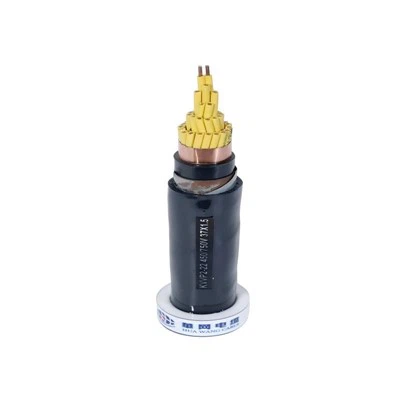

As a supplier of XLPE Flexible Cable, I've witnessed firsthand the increasing demand for this remarkable product in various industries. In this blog, I'll delve into the inductance characteristics of XLPE Flexible Cable, explaining what they are, why they matter, and how they impact the performance of electrical systems.
Understanding Inductance in Cables
Inductance is a fundamental electrical property that describes the ability of a conductor to store energy in a magnetic field when an electric current flows through it. In the context of cables, inductance plays a crucial role in determining how the cable behaves in an electrical circuit. When current flows through a cable, it creates a magnetic field around the conductor. This magnetic field can induce a voltage in nearby conductors or even in the cable itself, which can affect the overall performance of the circuit.


The inductance of a cable is influenced by several factors, including the geometry of the cable, the material of the conductor, and the presence of any magnetic materials in the vicinity. For XLPE Flexible Cable, the inductance characteristics are particularly important due to its widespread use in applications where flexibility and high performance are required.
Inductance Characteristics of XLPE Flexible Cable
XLPE, or cross-linked polyethylene, is a popular insulation material used in flexible cables due to its excellent electrical and mechanical properties. When it comes to inductance, XLPE Flexible Cable offers several key characteristics that make it a preferred choice for many applications.
Low Inductance
One of the primary advantages of XLPE Flexible Cable is its relatively low inductance. The design and construction of the cable are optimized to minimize the magnetic field generated by the current flow, resulting in lower inductance values. This low inductance is beneficial in applications where high-frequency signals or rapid changes in current are involved. For example, in data transmission cables, low inductance helps to reduce signal distortion and interference, ensuring reliable and high-speed data transfer.
Consistent Inductance
Another important characteristic of XLPE Flexible Cable is its consistent inductance along the length of the cable. This consistency is crucial for maintaining the integrity of the electrical signal and ensuring uniform performance throughout the cable. The manufacturing process of XLPE Flexible Cable is carefully controlled to ensure that the inductance remains within a narrow tolerance range, providing reliable and predictable performance in various applications.
Frequency Response
XLPE Flexible Cable exhibits excellent frequency response characteristics, which means it can handle a wide range of frequencies without significant loss or distortion. This makes it suitable for use in applications such as telecommunications, audio systems, and high-speed data networks. The low inductance and consistent impedance of the cable contribute to its ability to transmit signals accurately across different frequencies, ensuring clear and reliable communication.
Impact of Inductance on Cable Performance
The inductance characteristics of XLPE Flexible Cable have a significant impact on its performance in electrical systems. Here are some of the key ways in which inductance affects cable performance:
Signal Integrity
As mentioned earlier, low inductance helps to maintain signal integrity by reducing signal distortion and interference. In high-speed data transmission applications, even small amounts of signal distortion can lead to errors and data loss. By minimizing inductance, XLPE Flexible Cable ensures that the electrical signals remain clean and accurate, resulting in reliable data transfer.
Power Loss
Inductance can also contribute to power loss in a cable. When current flows through a cable with high inductance, energy is stored in the magnetic field and then dissipated as heat. This power loss not only reduces the efficiency of the electrical system but can also cause the cable to overheat, potentially leading to safety hazards. XLPE Flexible Cable's low inductance helps to minimize power loss, improving the overall efficiency of the system and reducing energy consumption.
Voltage Drop
Inductance can cause a voltage drop along the length of the cable, especially in applications where high currents are involved. This voltage drop can affect the performance of electrical devices connected to the cable, leading to reduced power output and potential malfunctions. By having low inductance, XLPE Flexible Cable helps to minimize voltage drop, ensuring that the electrical devices receive the required voltage for proper operation.
Applications of XLPE Flexible Cable
The unique inductance characteristics of XLPE Flexible Cable make it suitable for a wide range of applications across various industries. Here are some of the common applications where XLPE Flexible Cable is used:
Industrial Automation
In industrial automation systems, XLPE Flexible Cable is used to connect sensors, actuators, and control devices. The low inductance and excellent frequency response of the cable ensure reliable communication between these components, enabling precise control and monitoring of industrial processes.
Renewable Energy
Renewable energy sources such as solar and wind power require flexible cables to transmit electricity from the generation source to the grid. XLPE Flexible Cable's low inductance and high temperature resistance make it an ideal choice for these applications, ensuring efficient and reliable power transmission.
Telecommunications
In the telecommunications industry, XLPE Flexible Cable is used for data transmission, voice communication, and network connectivity. The cable's ability to handle high frequencies and maintain signal integrity makes it suitable for use in high-speed broadband networks, fiber optic systems, and wireless communication infrastructure.
Transportation
In the transportation sector, XLPE Flexible Cable is used in vehicles, trains, and aircraft for various electrical systems. The cable's flexibility, durability, and low inductance make it well-suited for use in these applications, where space is limited and reliable electrical performance is essential.
Comparing XLPE Flexible Cable with Other Types of Cables
When considering the inductance characteristics of XLPE Flexible Cable, it's useful to compare it with other types of cables commonly used in similar applications. Here's a brief comparison with LSZH Flexible Cable and High-Temperature Flexible Cable:
LSZH Flexible Cable
LSZH, or low smoke zero halogen, cables are designed to emit low levels of smoke and toxic gases in the event of a fire. While LSZH cables offer excellent fire safety properties, they may have higher inductance values compared to XLPE Flexible Cable. This can make them less suitable for applications where low inductance and high-frequency performance are critical.
High-Temperature Flexible Cable
High-Temperature Flexible Cable is designed to withstand extreme temperatures, making it suitable for use in harsh environments. However, the materials used in high-temperature cables may have different electrical properties, including higher inductance. XLPE Flexible Cable, on the other hand, offers a good balance between temperature resistance and low inductance, making it a more versatile choice for many applications.
Conclusion
In conclusion, the inductance characteristics of XLPE Flexible Cable play a crucial role in determining its performance in electrical systems. The low inductance, consistent inductance, and excellent frequency response of XLPE Flexible Cable make it a preferred choice for a wide range of applications, including industrial automation, renewable energy, telecommunications, and transportation.
If you're in the market for high-quality XLPE Flexible Cable or have any questions about its inductance characteristics and suitability for your application, I encourage you to reach out to us. Our team of experts is ready to assist you in selecting the right cable for your needs and providing you with the best possible solutions. Contact us today to start a discussion about your cable requirements and explore the benefits of working with a trusted XLPE Flexible Cable supplier.
References
- Grover, F. W. (1946). Inductance Calculations: Working Formulas and Tables. Dover Publications.
- Popovic, Z. D. (2001). Introductory Circuit Analysis. Prentice Hall.
- Terman, F. E. (1955). Radio Engineers' Handbook. McGraw-Hill.